survey_53 — Chinese artists abroad
1. Cai Guo-Qiang — 蔡国强 (Quanzhou, 1957)
A pyrotechnic artist and maker of gunpowder drawings and “explosion events”: he combines Daoist cosmology, the Chinese fireworks tradition and the Western institutional context; winner of the Golden Lion at the 48th Venice Biennale (1999).
- Path — born in 1957 in Quanzhou (Fujian), into a family connected with bookselling and calligraphy; in the early 1980s he studied stage design at the Shanghai Theatre Academy; in 1986 he moved to Japan (Tokyo), and since 1995 he has lived and worked in New York.
- Method — gunpowder drawings on paper, “explosion events” and large-scale installations; he works with fire, smoke, light and the uncontrolled element, joining the Chinese technique of fireworks to the idea of an “invisible world” and Daoist natural philosophy.
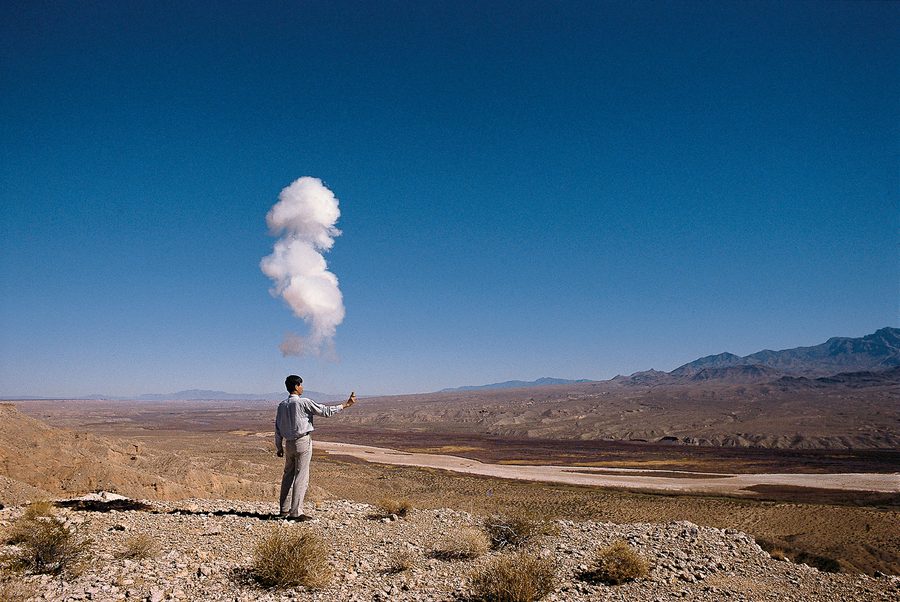
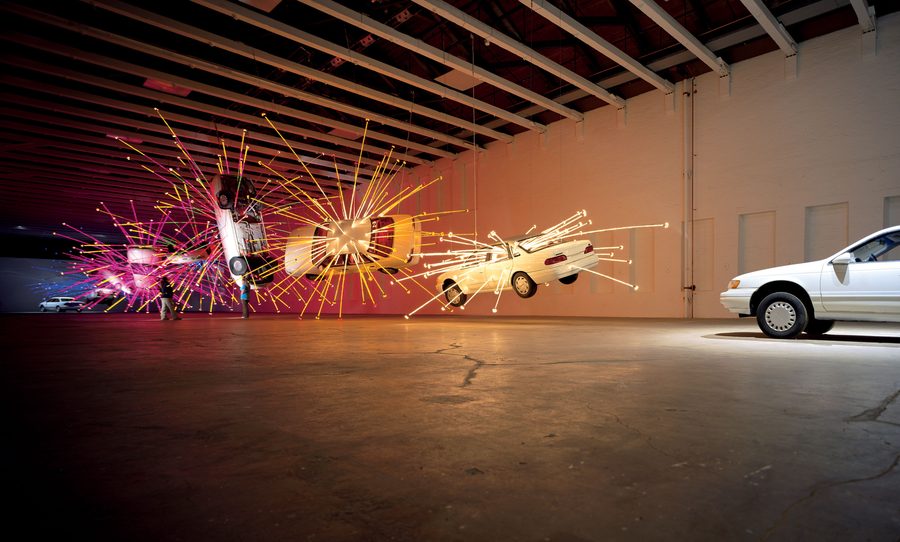
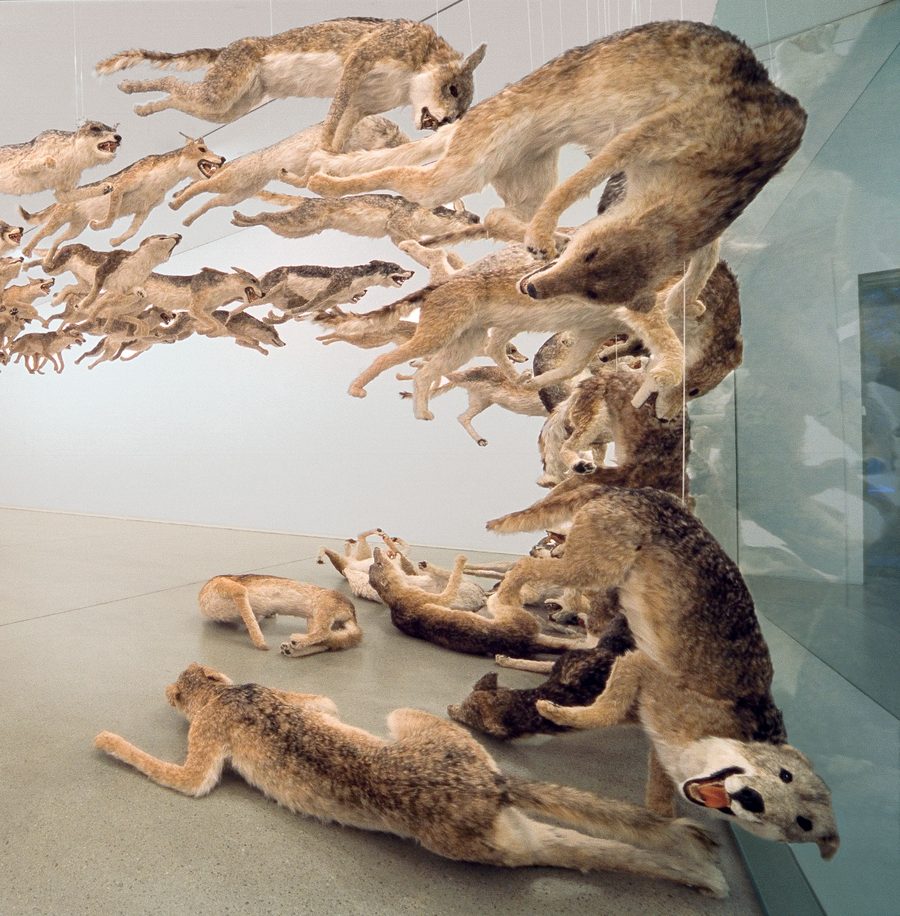
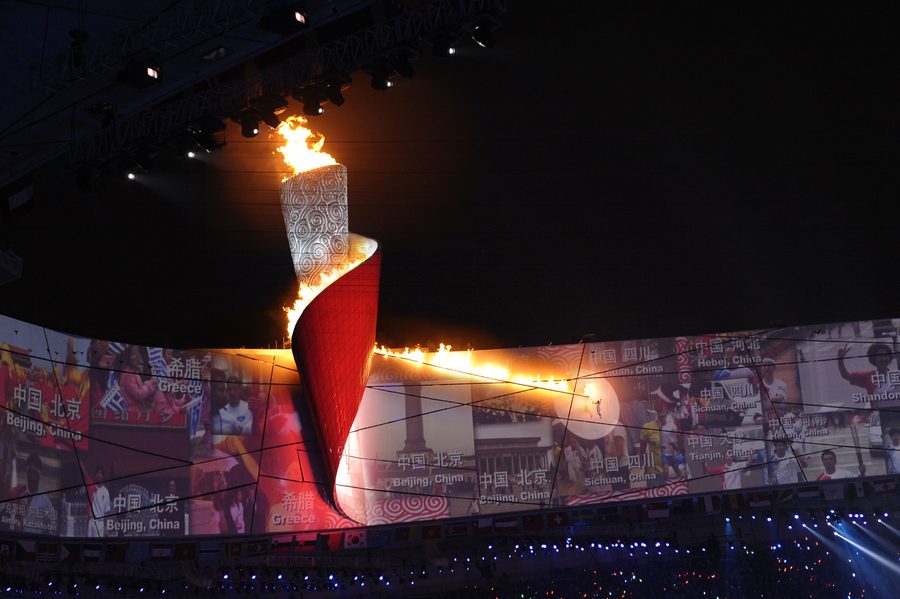
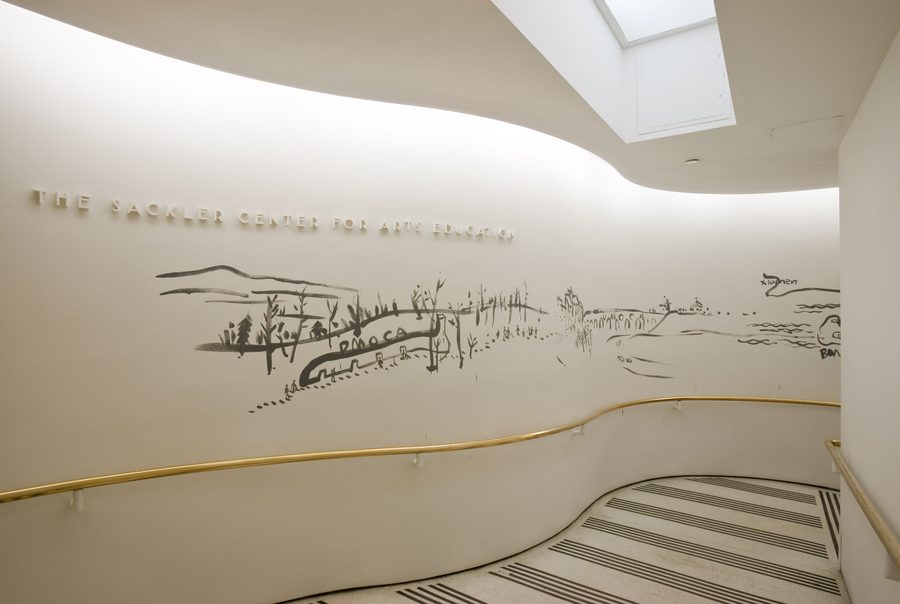
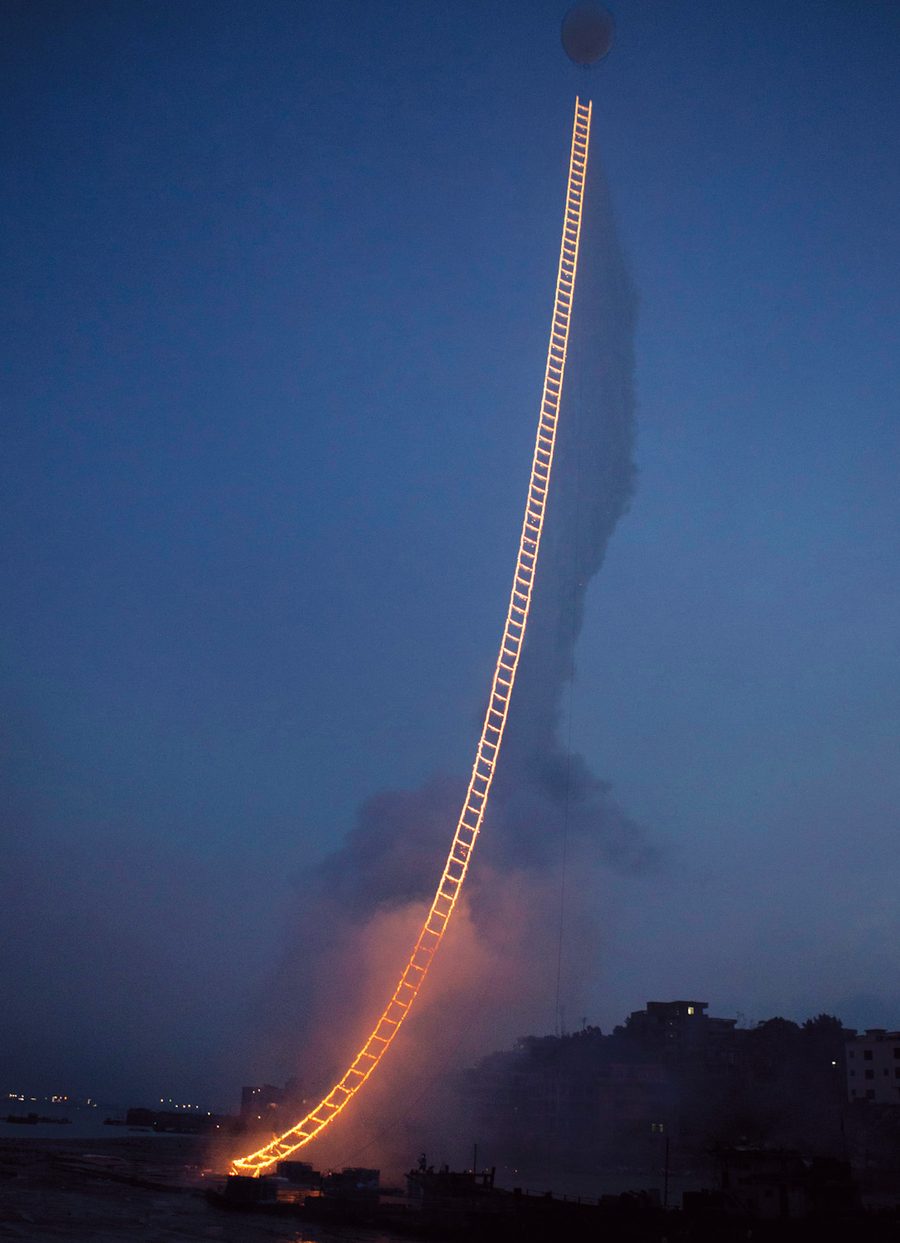
- Works — “The Century with Mushroom Clouds: Project for the 20th Century” (1996, Nevada Test Site); “Inopportune: Stage One” (2004, MASS MoCA); “Head On” (2006, Deutsche Guggenheim, Berlin); the fireworks for the Beijing Olympic ceremonies (2008); “Everything Is Museum” (2008); “Sky Ladder” (2015, Huiyu Island, Quanzhou); in 2022 he was director of visual effects and fireworks for the opening and closing ceremonies of the Beijing Winter Olympics.
2. Huang Yong Ping — 黄永砯 (Xiamen, 1954 — Paris, 2019)
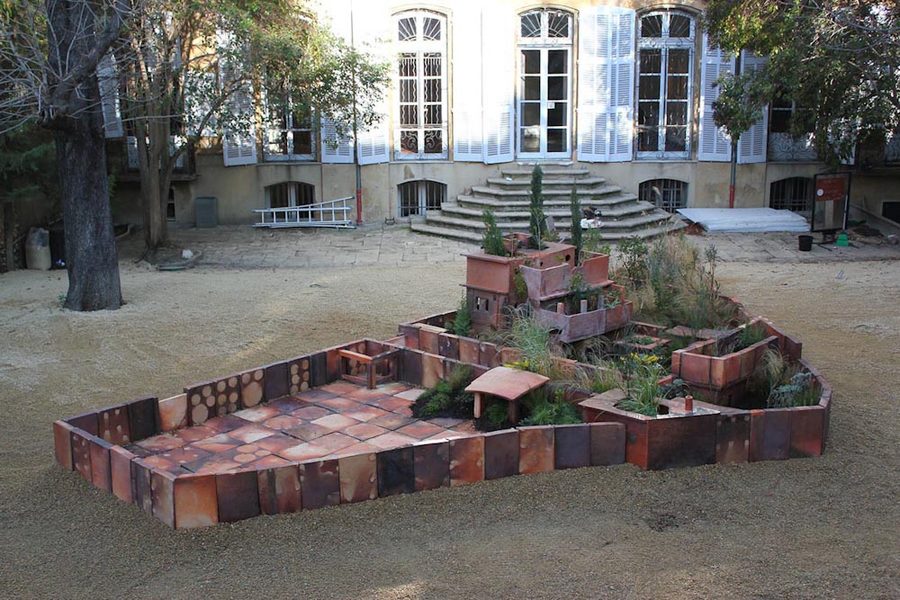
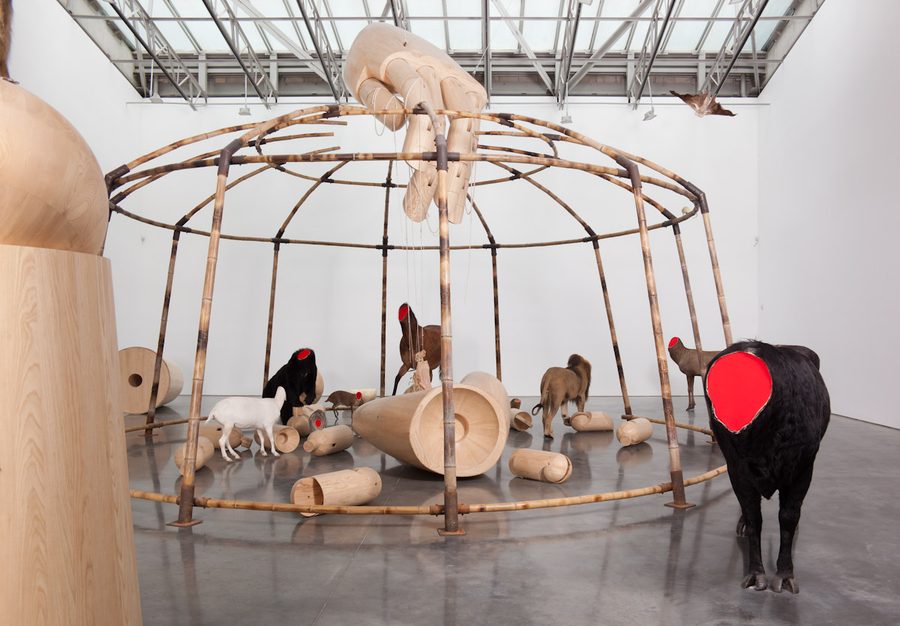
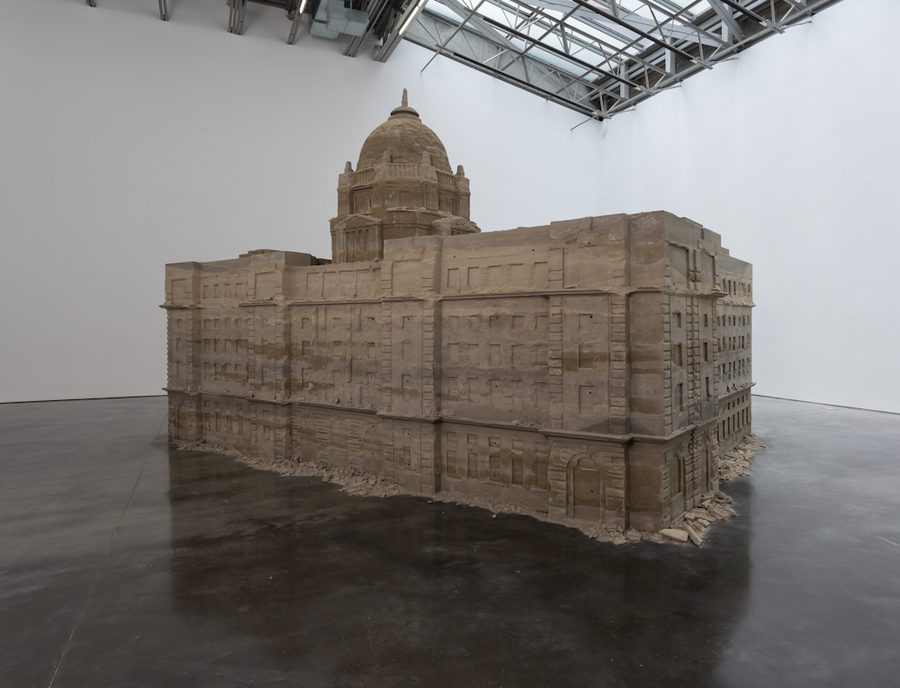
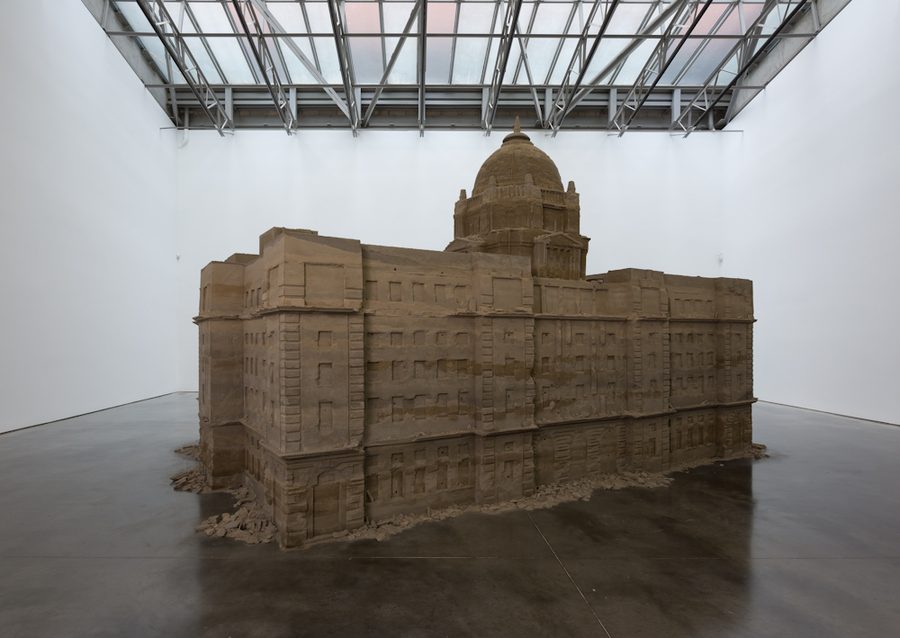
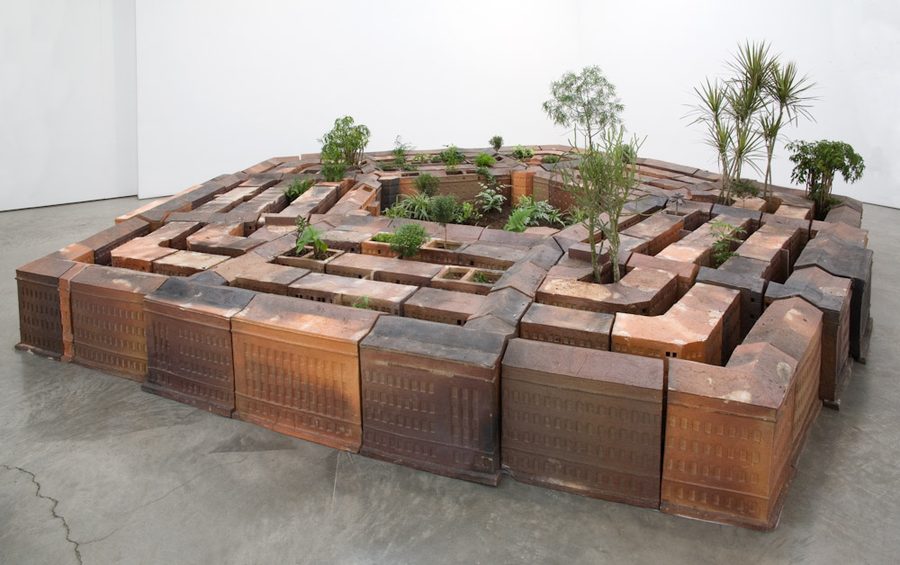
One of the key figures of the Chinese avant-garde of the 1980s and a founder of the Xiamen Dada group; from 1989 he worked in France, building large-format installations from stuffed animals, ceramics, bamboo and sand, addressing questions of cultural identity, politics and history.
- Path — born in 1954 in Xiamen (Fujian); in 1982 he graduated from the Zhejiang Academy of Art in Hangzhou; in 1986 he became one of the founders of the Xiamen Dada group; in 1989 he emigrated to France and settled in Paris, where he lived until his death in 2019.
- Method — total installations and objects assembled from ready-made things, stuffed animals, ceramics, bamboo groves and earth; he draws at once on Daoist and Buddhist imagery and on Western art history, joining East and West in a critique of ideological and cultural stereotypes.
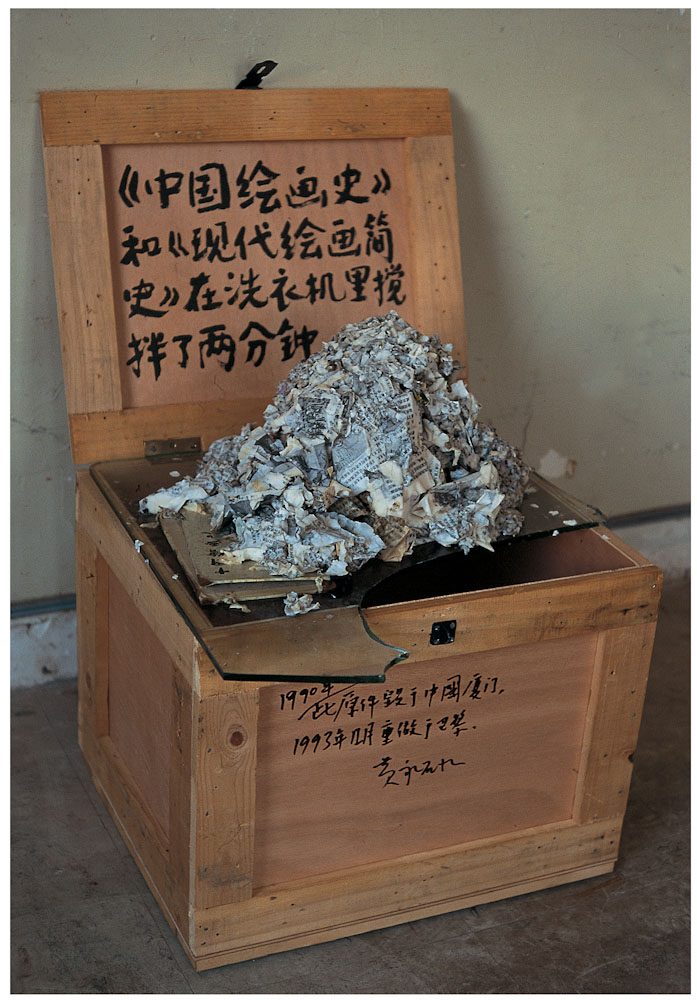
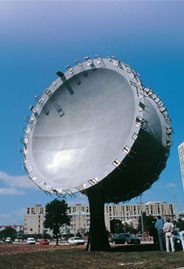
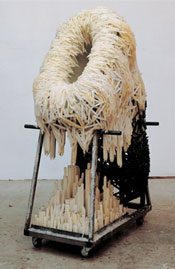
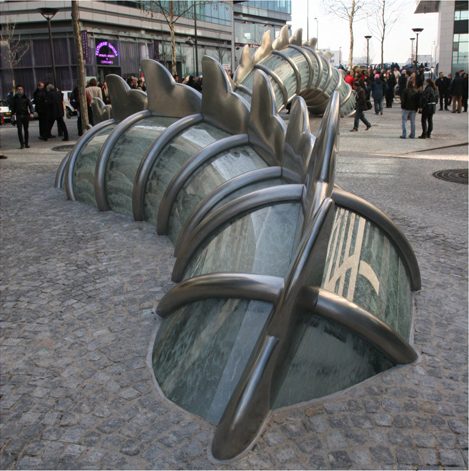
- Works — “The History of Chinese Painting and the History of Modern Western Art Washed in the Washing Machine for Two Minutes” (1987/1993); “Bat Project” (series, 2001–2005); “Theatre of the World” (2007, 52nd Venice Biennale); “Tower Snake” (2009); “Circus” (2012); “Abbottabad” (2013); “Bank of Sand, Sand of Bank” (shown in New York, Gladstone Gallery, 2018); in 1999 he was made a Chevalier and in 2015 an Officier of the French Order of Arts and Letters.
3. Chen Zhen — 陈箴 (Shanghai, 1955 — Paris, 2000)
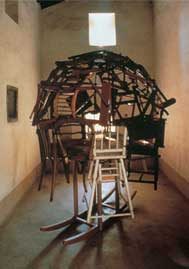
A key figure of the Chinese avant-garde emigration of the 1990s: he left China in 1986 and worked between Shanghai, New York and Paris; he built large-scale installations from chairs, beds, bathtubs and found objects, joining Daoism and Buddhism with Western scientific thought.
- Path — born in 1955 in Shanghai; he studied painting at the Shanghai Fine Arts School and was shaped during the Cultural Revolution; in 1986 he left China and moved to Paris, where he lived and worked until his death in 2000.
- Method — after the painting of the 1980s he turned to installation: he gathers disused objects (chairs, beds, tables, bathtubs), rethinking them as new symbolic forms; his themes are the body, health, identity, memory, politics and cultural translation.
- Works — “Un Monde accroché/détaché” (1990); “La Pendule d'Eau / Le Balancier rouge” (1991); “Chaise de Nirvâna” (1997); “Round Table — Side by Side” (1997); “Constellation humaine” (1998–2000); “Autel de lumière” (1999); “Zen Garden” (2000); “La danse de la fontaine émergente” (1998–2008); the artist's legacy is preserved by the Paris-based association ADAC (Association des Amis de Chen Zhen) and Galleria Continua.
4. Tehching Hsieh — 谢德庆 (Jiayi County, Taiwan, 1950)
A pioneer of durational performance: in 1974 he smuggled himself from Taiwan into the United States and in New York carried out five one-year performances (1978–1986) and the “Thirteen Year Plan” (1986–1999), subjecting his own life to strict rules.
- Path — born on 31 December 1950 in Taiwan; he trained as a painter; in 1974 he secretly arrived in the United States and until the 1988 amnesty lived without papers, working at hard labour; since the late 1970s he has lived in New York (Brooklyn).
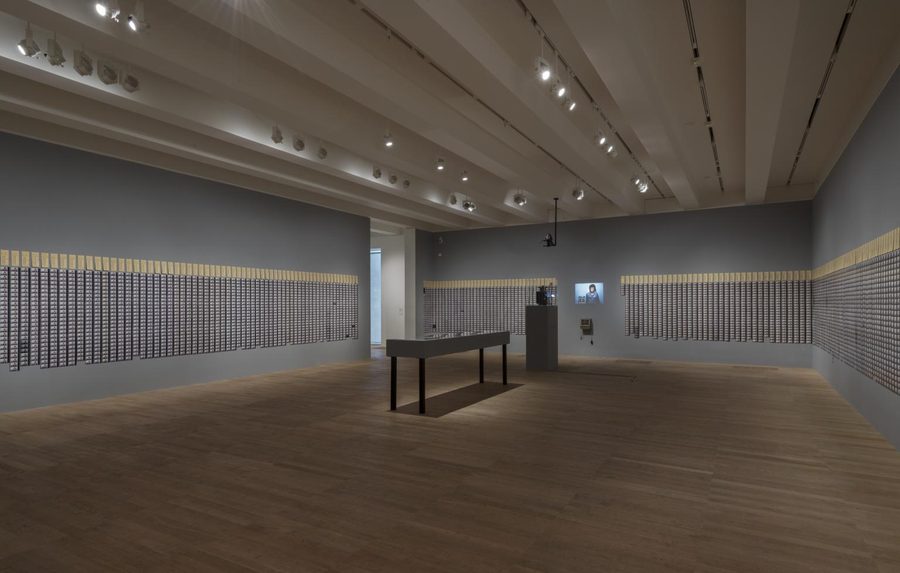
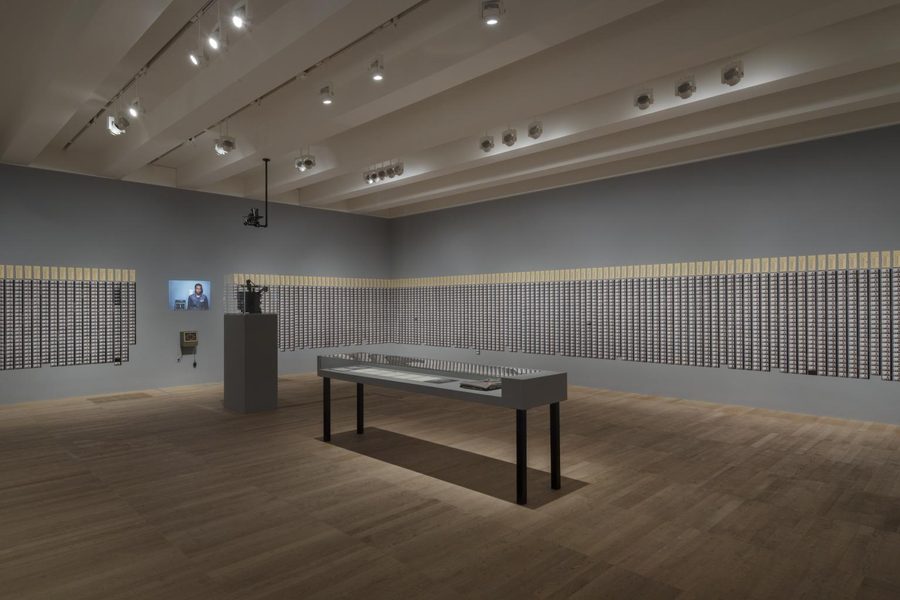
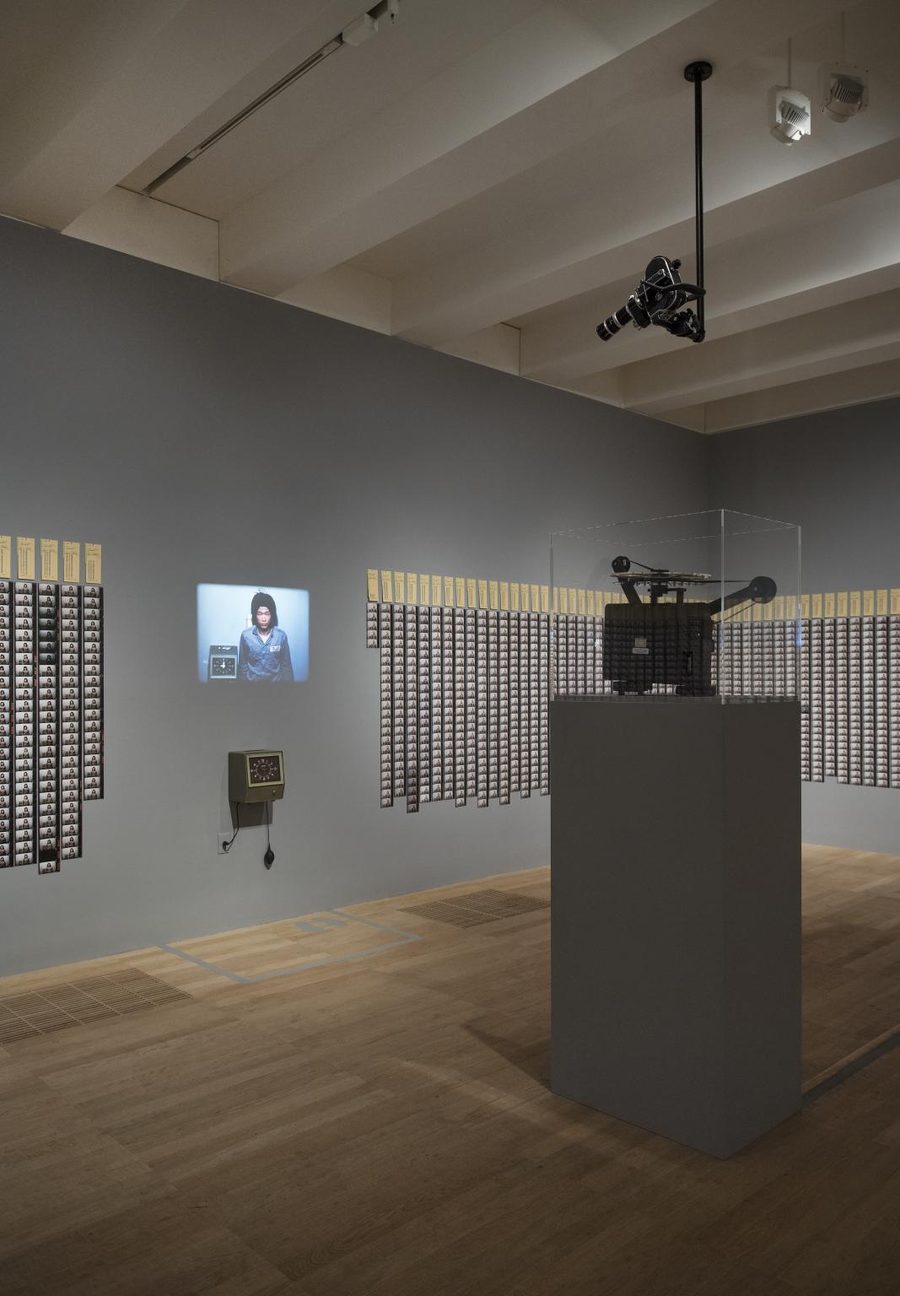
- Method — “lifeworks”: performances lasting a year, based on a contract signed in advance and a strict rule the artist does not break; the documentation (photographs, time cards, contracts, written statements, work uniform) becomes exhibition material.
- Works — five one-year performances: “One Year Performance 1978–1979” (Cage Piece — a year in a cage), “1980–1981” (Time Clock Piece — punching a time clock every hour), “1981–1982” (Outdoor Piece — a year outdoors on the streets of Manhattan), “1983–1984” (Art/Life, Rope Piece — a year tied to Linda Montano), “1985–1986” (No Art Piece — a year without art); then “Tehching Hsieh 1986–1999 (Thirteen Year Plan)”. In 2009, a solo exhibition “Performance 1: Tehching Hsieh” at MoMA; in 2017 he represented Taiwan at the Venice Biennale (project “Doing Time”); in 2024 he transferred 11 key works to the Dia Art Foundation collection.
5. Maya Lin — 林璎 (Athens, Ohio, 1959)
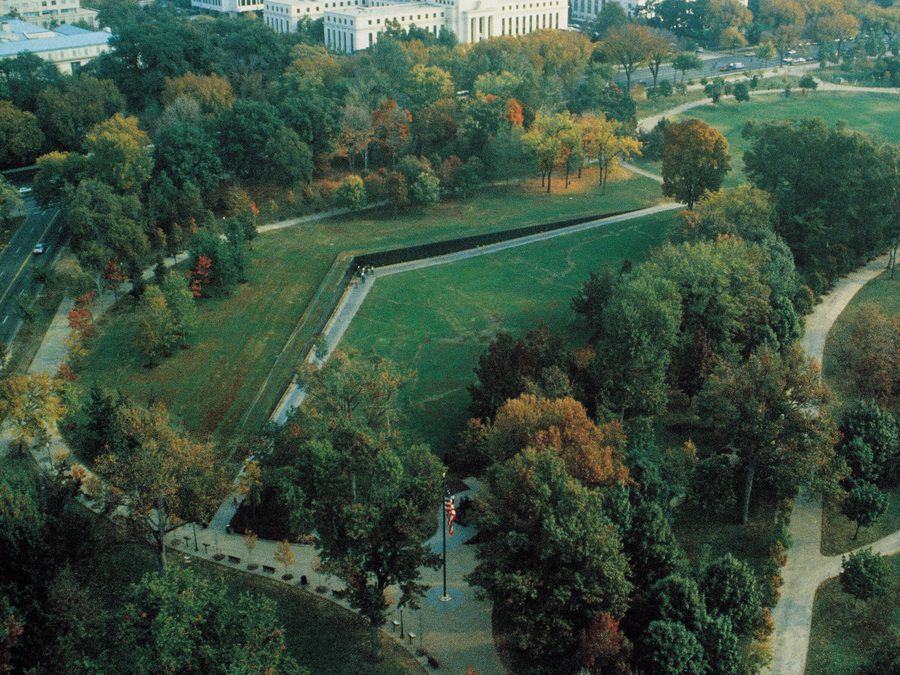
An American artist and architect of Chinese descent: the author of the Vietnam Veterans Memorial in Washington and of memorial and landscape projects; she works at the intersection of sculpture, architecture and ecology.
- Path — born in 1959 in Athens, Ohio, into a family of Chinese emigrants: her father, Henry Huan Lin, was a ceramicist and dean of the art faculty at Ohio University, and her mother was a poet; in 1981 she graduated from Yale University (Bachelor of Arts) and in 1986 took a Master of Architecture there; she lives and works in New York.
- Method — large-scale landscape and memorial works in which the form is set by the topography of the site; she uses earth, water, granite, wood and glass; a separate line is her environmental projects and the digital memorial “What Is Missing?”.
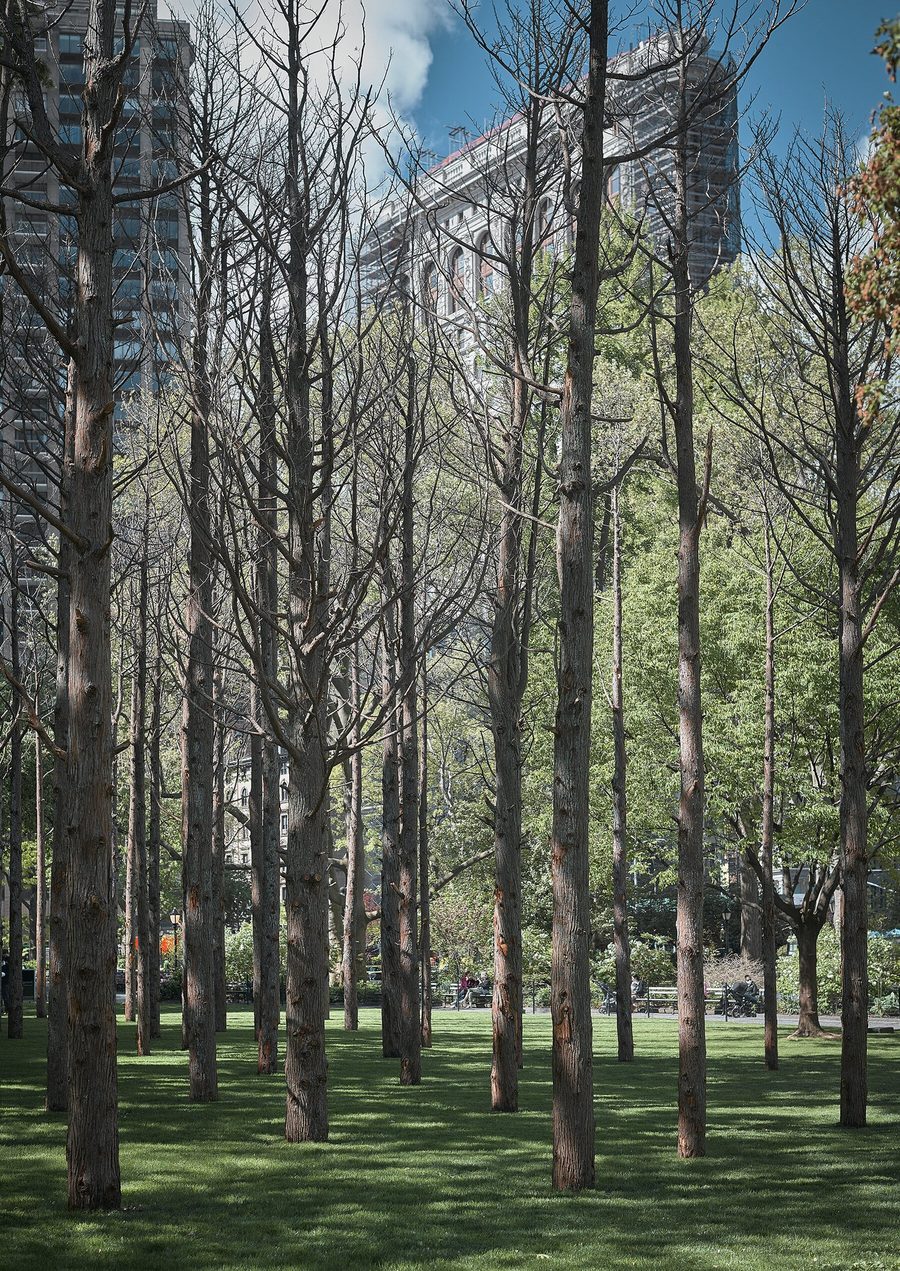
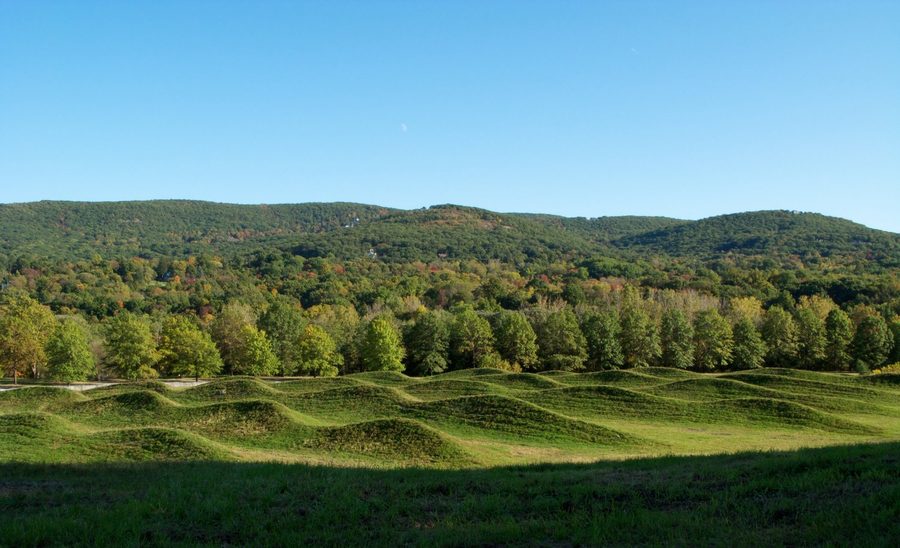
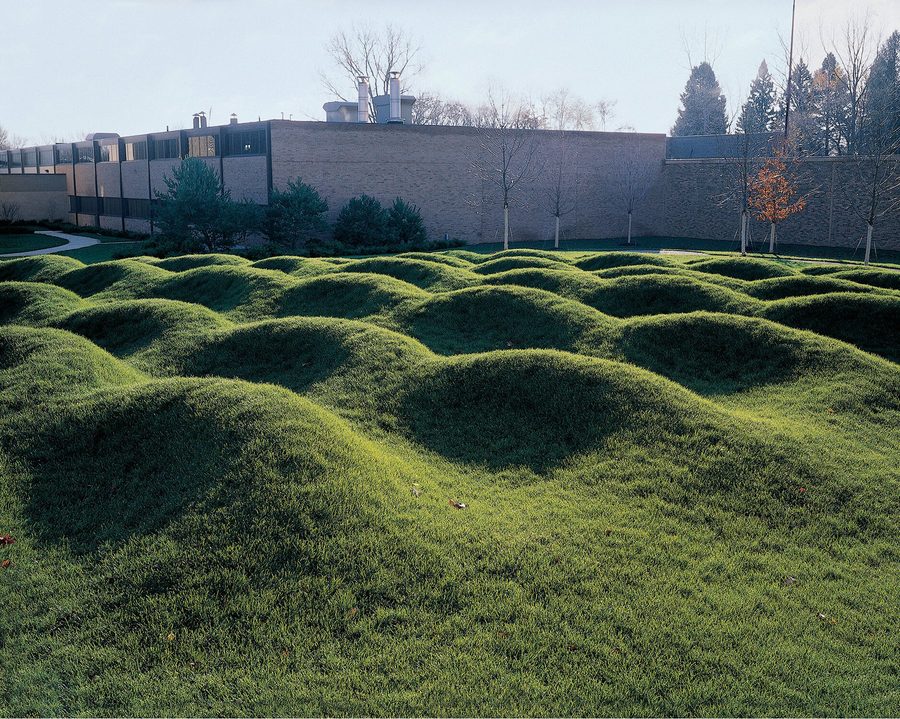
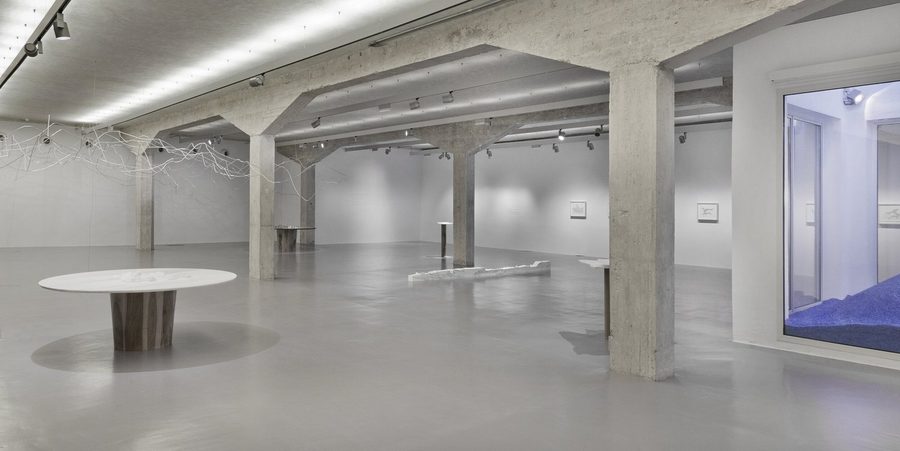
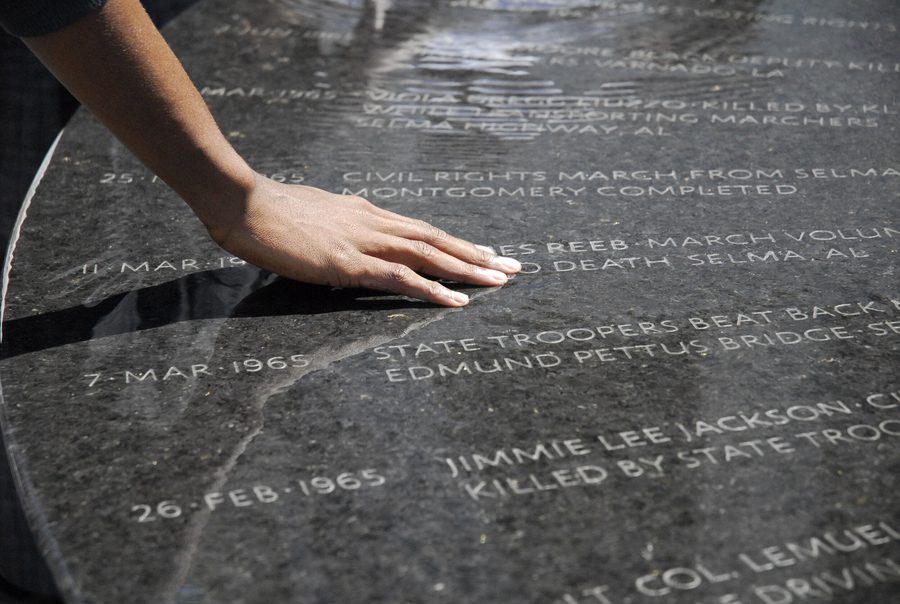
- Works — the Vietnam Veterans Memorial (Washington, 1982; the design was chosen in a competition when she was 21); the Civil Rights Memorial (Montgomery, Alabama, 1989); the “Wave Field” series (Michigan, 1995) and “Storm King Wavefield” (2007–2008); “11 Minute Line” (2004); “Rivers and Mountains” (2014); “Ghost Forest” (Madison Square Park, New York, 2021); the projects “What Is Missing?” and “Seeing Through the Universe” (Obama Presidential Center, Chicago); in 2016 she was awarded the Presidential Medal of Freedom.